DeepState Network New York
May 30, 2026
AI FUELING A NEW CHIP EMPIRE
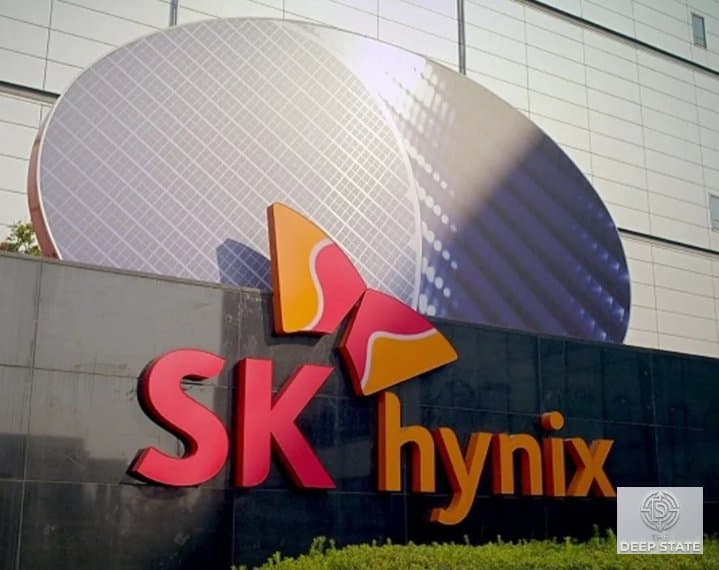
SK Hynix has officially entered the ranks of the world's trillion-dollar corporations, marking another milestone in the explosive growth of the artificial intelligence sector.
The South Korean memory-chip manufacturer crossed the $1 trillion valuation threshold this week, joining rivals Samsung Electronics and Micron, both of which achieved similar milestones earlier this month. Together, the three firms dominate global memory chip production, supplying critical components that power AI data centers, cloud infrastructure, and next-generation computing systems.
Industry analysts say the development reflects a dramatic shift in the semiconductor landscape. While attention in recent years focused heavily on advanced processors designed by companies such as Nvidia and manufactured by TSMC, the AI revolution has created an equally urgent need for high-performance memory chips capable of handling vast amounts of data.
As AI adoption accelerates worldwide, shortages of advanced memory products have driven prices higher and boosted corporate earnings across the sector.
RECORD PROFITS AND RISING TENSIONS
The semiconductor boom has delivered extraordinary financial rewards.
Both Samsung Electronics and SK Hynix reported record first-quarter profits in 2026. However, the rapid growth has also intensified tensions within the workforce.
Differences in employee compensation triggered labor disputes at Samsung, where workers threatened an extended strike before reaching a new agreement with management. According to industry reports, employees at SK Hynix could receive bonuses approaching $900,000 this year, while Samsung workers may receive bonuses worth up to $400,000.
The disparity has sparked broader debates about how the benefits of the AI economy are distributed and whether wealth generated by technological breakthroughs is reaching workers outside the industry's most successful companies.
TRILLION-DOLLAR AI ECONOMY
The surge in chipmakers mirrors the broader rise of AI-focused corporations worldwide.
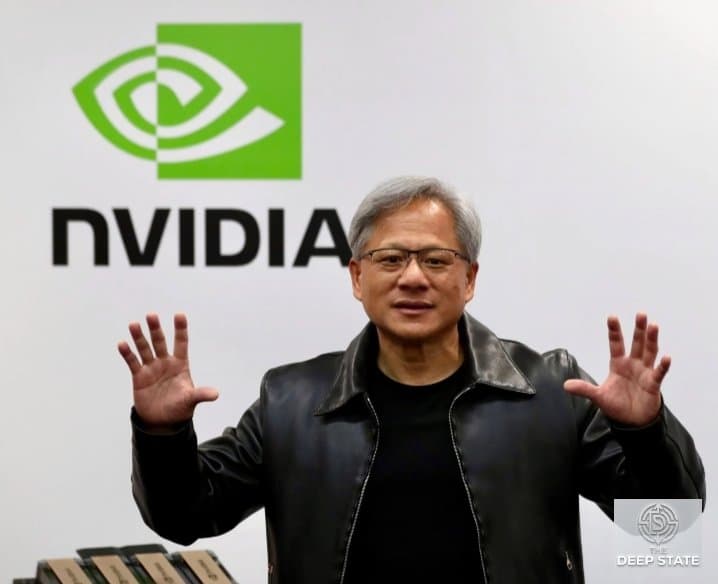
Nvidia remains the world's most valuable company, with a market capitalization exceeding $5 trillion, while AI startup Anthropic recently announced a massive funding round that pushed its valuation close to the trillion-dollar mark.
Investors continue pouring capital into AI-related businesses, betting that artificial intelligence will transform industries ranging from healthcare and finance to manufacturing and education.
WARNING SIGNS OF AN AI BUBBLE
Despite the optimism, economists and market strategists caution that the extraordinary rally may carry significant risks.
Analysts warn that stock valuations increasingly depend on expectations of future AI profits. If technological adoption slows or projected earnings fail to materialize, markets could face a sharp correction.
South Korea's stock market offers a striking example. Samsung Electronics and SK Hynix now account for roughly half of the country's benchmark index, creating concerns that any downturn in the technology sector could trigger widespread volatility across the broader economy.
Financial experts describe South Korea as a leading example of Asia's AI-driven investment surge, but they also note that heavy dependence on a small number of technology companies leaves markets vulnerable to sudden shocks.
THE ROAD AHEAD
As governments, investors, and corporations race to secure leadership in artificial intelligence, semiconductor manufacturers have become the backbone of the digital economy.
SK Hynixs entry into the trillion-dollar club underscores the immense value now attached to the infrastructure powering AI. Yet the same forces driving record growth are also raising questions about inequality, market concentration, and the sustainability of the AI investment boom.
Whether this era becomes the foundation of a new technological revolution or the peak of a speculative bubble remains one of the defining economic questions of the decade