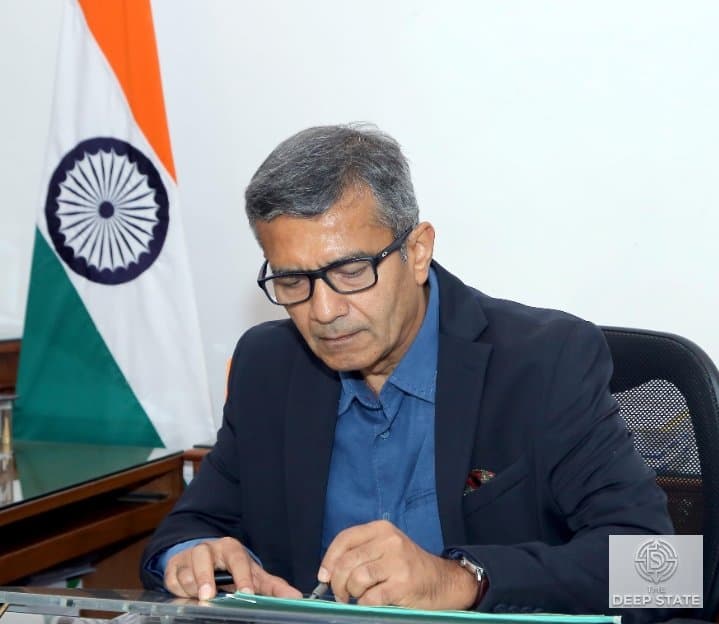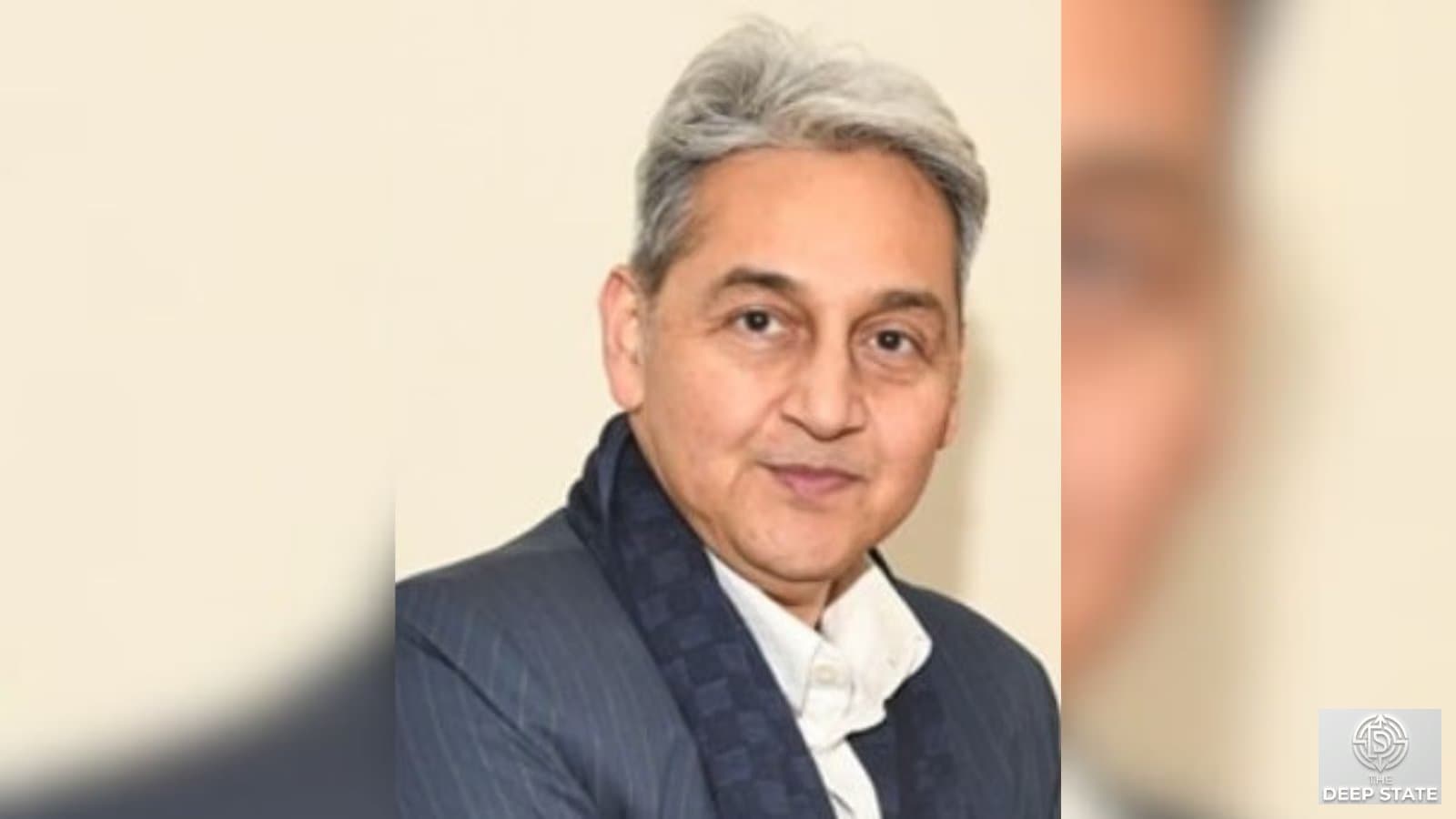
Jaipur: The Anti-Corruption Bureau’s (ACB) chargesheet in the multi-crore Jal Jeevan Mission (JJM) procurement case has reignited debate over whether the investigation is biased or transparent. At the heart of the controversy lies a striking asymmetry: while the alleged fraud is rooted in decisions taken during the tenure of then Additional Chief Secretary (PHED) Sudhansh Pant, the investigative spotlight has largely settled on his successor, Subodh Agarwal.
The case pertains to alleged irregularities in the award of contracts linked to two firms — M/s Shri Ganpati Tubewell Company and M/s Shri Shyam Tubewell Company — that are accused of having secured work orders using forged experience certificates purportedly issued by IRCON. These certificates, investigators say, enabled the firms to secure as many as 104 work orders between 2021 and 2023.
But a closer look at the timeline of approvals presents a more complex picture than the chargesheet appears to convey. Of the 104 work orders, 67 were valued below Rs 5 crore and did not even require approval from the Finance Committee headed by the Additional Chief Secretary. The remaining 37 high-value tenders — the ones that fall squarely within the ACS’s domain — become critical to understanding where accountability lies.
Out of these 37, as many as 33 tenders were approved during the tenure of Sudhansh Pant between 2020 and 2022, when he headed the Public Health Engineering Department and chaired the Finance Committee. In contrast, only four tenders were cleared after Subodh Agarwal took charge of the department in April 2022.
This numerical imbalance is now central to the controversy surrounding the ACB’s action. Critics argue that the alleged scam — both in terms of scale and origin — is rooted in decisions taken before Agarwal assumed charge. Yet, the chargesheet foregrounds the approvals made during his tenure, creating the impression that the investigative lens has narrowed rather than expanded.
The chronology of events adds further depth to this contested narrative. According to documents cited in the case, the use of forged certificates began as early as April 2021, during Pant’s tenure as ACS, PHED. These certificates continued to pass through institutional checks for over a year, raising questions about systemic oversight mechanisms in place at the time.
When Agarwal took over the department, the procurement pipeline was already in motion. Files, bids, and technical verifications had moved through established procedures, including scrutiny by Bid Evaluation Committees (BEC), which are mandated under the Rajasthan Transparency in Public Procurement Act to verify technical credentials. As head of the Finance Committee, Agarwal’s role was limited to financial approvals based on technical clearances provided by subordinate officers — a distinction that has now become central to his defence.
More significantly, the turning point in the case appears to have come not during Pant’s tenure, but under Agarwal’s watch. In June 2023, a formal complaint from the Chief Vigilance Officer of IRCON flagged the experience certificates as fabricated. What followed was a sequence of actions that complicates the prosecution’s narrative.
Within weeks of receiving the complaint, Agarwal ordered the formation of a three-member high-level committee to investigate the allegations. He also directed an immediate halt to all work orders and payments to the implicated firms. By August 2023, after the committee discovered the forgery, all contracts linked to the firms were cancelled, and blacklisting proceedings were initiated.
Further administrative action followed. An executive engineer, Vishal Saxena, who had reportedly verified the forged certificates, was suspended. Payments were frozen, contracts rescinded, and legal proceedings initiated against the firms. In effect, the alleged fraud was not only detected but also acted upon during Agarwal’s tenure.
This sequence has led to what some describe as the “action versus accusation paradox.” The officer under whose watch the irregularities were uncovered and acted upon now finds himself at the centre of the chargesheet, while the period during which the bulk of approvals were granted remains relatively less scrutinised.
Legal arguments emerging from the case reinforce this paradox. Agarwal’s petition challenges the very basis of the charges, pointing out that no payments were made to the firms for the tenders cleared during his tenure, thereby resulting in zero financial loss to the exchequer. In corruption cases, the absence of pecuniary loss often complicates the establishment of criminal intent, a factor likely to feature prominently in court proceedings.
Another dimension of the case relates to procedural safeguards. Under procurement rules, technical verification is the responsibility of specialised committees and engineers, not the Finance Committee chaired by the ACS. This division of responsibility raises questions about whether liability can be attributed solely on the basis of financial approvals, particularly when those approvals are contingent upon technical certifications provided by others.
If the numerical disparity in tender approvals raises questions, the financial scale adds another layer. According to the defence, over 95% of the total value of work orders — approximately Rs 605 crore — was approved during Pant’s tenure. This suggests that the bulk of the alleged financial exposure predates Agarwal’s leadership of the department.
Notably, judicial observations have also entered the discourse. In an order dated February 2, 2026, a Special Court under the Prevention of Money Laundering Act flagged what it termed a “prima facie bias” in the investigation, noting that forged certificates were in use as early as 2021 but the probe appeared to focus narrowly on 2023 approvals.
Such observations, though not determinative of guilt or innocence, underscore the broader concern that the investigation may not fully reflect the timeline of events. For a case of this magnitude — involving public funds, institutional processes, and multiple layers of decision-making — the expectation is that accountability would be mapped comprehensively across tenures.
The ACB, for its part, maintains that its chargesheet is based on evidence gathered during the course of the investigation. Officials have indicated that further action remains possible as the case evolves. However, the current framing of the case has already shaped public and administrative perceptions.
Beyond individual culpability, the case also shines a light on systemic vulnerabilities in public procurement. The acceptance of forged certificates by Bid Evaluation Committees over an extended period suggests institutional lapses that transcend individual tenures. The fact that these lapses remained undetected until external verification was triggered underscores the need for more robust due diligence mechanisms.
Yet, even as the systemic dimension gains attention, the immediate controversy remains centred on the distribution of accountability. Was the investigation calibrated to match the timeline and scale of decisions? Or has it disproportionately emphasised actions taken at the tail end of the process?
For Subodh Agarwal, the chargesheet marks a critical juncture — one that will be tested in court, where documentary evidence, decision chains, and procedural roles will come under scrutiny. For the investigative agencies, it represents a test of whether the case can withstand questions over consistency and completeness.
For the broader public, the stakes are larger than the fate of any single official. The Jal Jeevan Mission is a flagship programme aimed at expanding access to drinking water — a mission that depends not just on funds and infrastructure but on institutional integrity.
As the case moves forward, the central question may not simply be who signed which file, but whether the investigation has succeeded in capturing the full arc of how the alleged fraud took root, evolved, and was eventually exposed.